What’s changing for under 16s and parents on YouTube in Australia

Today we shared an update with our users and creators about what to expect from the YouTube experience for under 16s in Australia as a result of the Social Media Minimum Age Act.
This is a disappointing update to share. We deeply care about the safety of kids and teens on our platform; it’s why we spent more than a decade building robust protections and parental controls that families rely on for a safer YouTube experience. But as we have consistently said, this rushed regulation misunderstands our platform and the way young Australians use it. Most importantly, this law will not fulfill its promise to make kids safer online, and will, in fact, make Australian kids less safe on YouTube. We’ve heard from parents and educators who share these concerns.
As the law takes effect on December 10, we will make changes to how YouTube works in Australia.
Here’s what to expect
- Viewers: Viewers must now be 16 or older to sign into YouTube. This means that anyone under 16 will be automatically signed out starting on December 10 and lose access to features that only work when you are signed into an account, including subscriptions, playlists and likes, and default wellbeing settings like “Take a Break” and Bedtime Reminders. Viewers can continue to watch YouTube while signed out. We determine a user’s age based on the age associated with their Google account and other signals and will continue to explore how we implement and apply appropriate age assurance.
- Parents: Parents will lose the ability to supervise their teen or tween’s account on YouTube, as these accounts only work when they are signed in. That means parents will no longer be able to use any controls they have set up, such as choosing an appropriate content setting or blocking specific channels. YouTube Kids is not affected.
- Creators: Creators under 16 will no longer be able to sign in to YouTube, upload videos or manage their channels, and their channels will no longer be viewable.
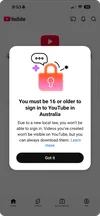
Viewers and creators can regain access to their accounts on YouTube when they turn 16. We will not delete or remove any of their existing content or data, and it will be waiting for them when they come back. They can also choose to download their content via Google Takeout, or delete any of their data or their channel completely.
Why this law won’t keep teens safer online
At YouTube, we believe in protecting kids in the digital world, not from the digital world. That’s why we’ve invested for more than a decade in consultation with child development experts to build age-appropriate products for our youngest users, like YouTube Kids, supervised experiences for teens and tweens, default wellbeing settings for all teens and robust parental controls. As the Social Media Minimum Age Act requires kids to use YouTube without an account, it removes the very parental controls and safety filters built to protect them—it will not make kids safer on our platform. These are the unfortunate consequences of a rushed legislative process that failed to allow for adequate consultation and consideration of the real complexities of online safety regulation.
The law also fundamentally misunderstands why teens come to YouTube in the first place. YouTube is a video streaming service where they come to watch and learn– everything from 'how to tie a tie' videos, to famous speeches, to newsmaking podcasts, to live concerts, to epic sports highlights. And increasingly, kids, teens and families are watching YouTube on television screens in their living room.
We are committed to finding a better path forward to keep kids safe online. We believe a more effective approach is one that empowers parents, rather than stripping away their choices, and allows kids to continue to derive the immense benefits of digital environments while protecting them from harm. Even as the ban comes into effect next week, we will continue to work with the Australian Government to advocate for effective, evidence-based regulation that actually protects kids and teens, respects parental choice, and avoids unintended consequences.