Kiwi students learn Computer Science without a computer, with CS Unplugged
When the world went into lockdown in March this year, teachers had to rapidly transition to remote learning. Sarah Ridgway was one of those teachers. Sarah is a Kiwi and has been a teacher for 14 years, working in education in both New Zealand and the United Kingdom. She is now back home teaching in a flexible space and utilises CS Unplugged materials to teach her Year 6-8 students Digital Technologies at her semi-rural school in Selwyn, Canterbury. As the school moved to distance learning, Sarah was aware that not all learners had access to a laptop or smartphone and some families may not have reliable internet access whilst attempting to learn from home. “I wanted the digital technology experiences to be accessible for everyone and thought the CS Unplugged resource gave me some really good lessons to start with.” Sarah said.
CS Unplugged is a set of fun, free resources that teach computer science concepts without a computer. Globally recognised as a great introduction to coding, and revolutionary in teaching computer science without a computer, Google has been a long time supporter of the programme.
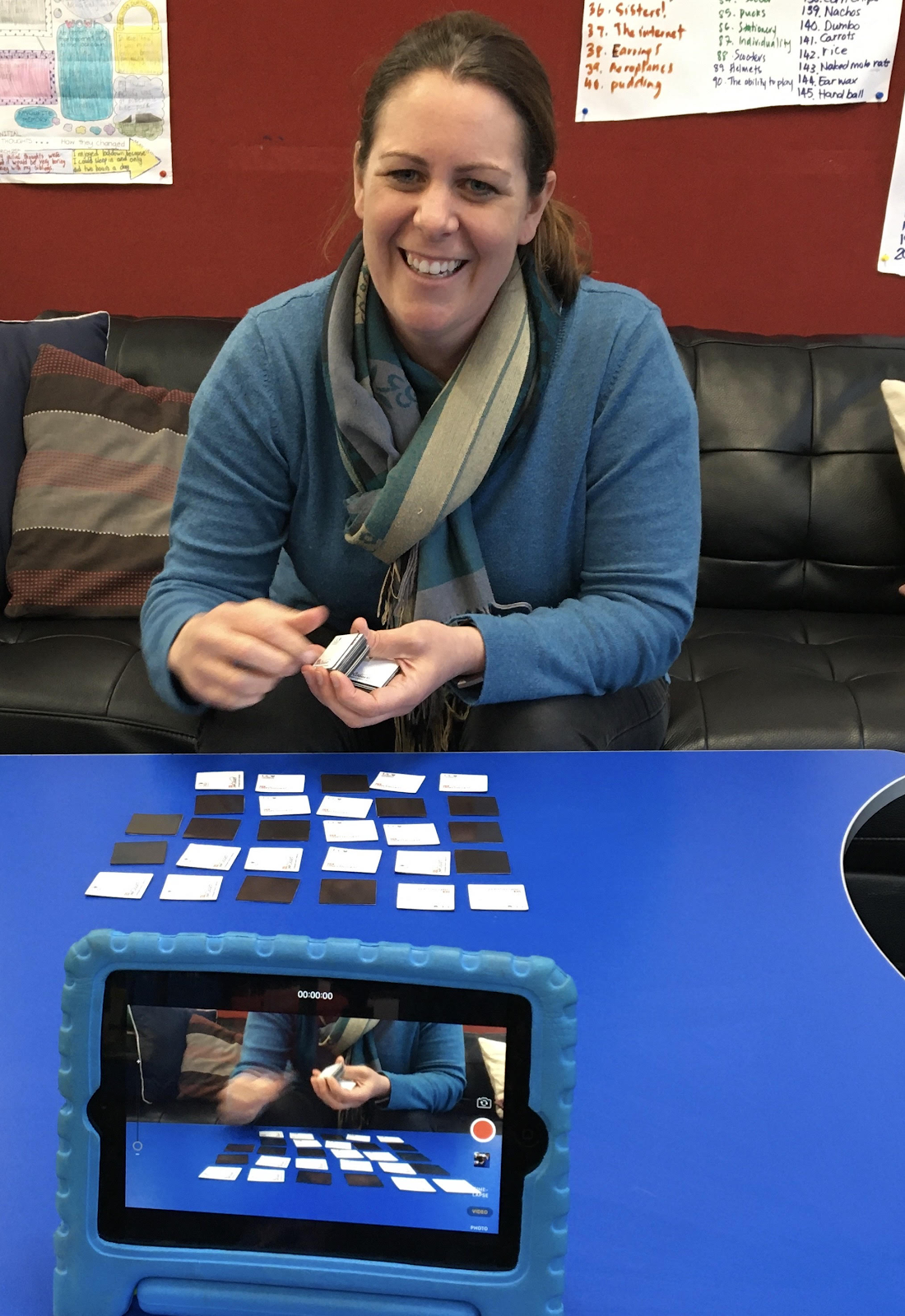
Credit: csunplugged.org. Caption: In this activity each of these cards represents one bit (binary digit). All data on computers is stored using bits, and if one of them changes accidentally because of something like interference on a network or small failures on a disk drive, the computer needs to detect that this has happened, and ideally put it right again. In this trick, flipping a card simulates a bit being changed, which causes an error in the data.

Although learning opportunities during lockdown were optional at her school, Sarah found that many students chose to complete the tasks and enjoyed getting their siblings and parents involved too. “I was able to modify activities so only everyday household items were needed. Many activities were things they could learn and then teach others in their bubble. Photos and videos of successful attempts at the tasks were regularly shared with our community with comments from parents about how much they had enjoyed the activity.”
Caption: Sarah records herself doing the “Mind-reading magic” activity so that it can be shared with her students for them to attempt at home.
Being part of the pilot programme for CS Unplugged meant that Sarah had used CS Unplugged materials prior to COVID-19 impacting education, and had attended a number of professional development courses in the school holidays to upskill and build her knowledge in Computer Science. Sarah noted, “When I did the workshops I realised how much fun computer science is and how it's not just about programming and data. There is so much to it and it can be explained to children through really fun and integrated learning opportunities.”
Tim Bell and his team who develop the CS Unplugged resources, at the University of Canterbury, instantly saw the need for remote learning resources that could be used by anyone, anywhere. They worked quickly to produce materials that adapted the classroom version of CS Unplugged to allow parents and caregivers to be involved in their children’s learning in the home environment. There are currently five new Unplugged At Home resources available with more to come. As a long time supporter of the programme, Google wants to ensure students and teachers everywhere should have the resources they need to succeed in a digital future.