Supporting Australian university science: turning data into practical insights with AI
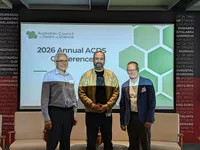
Brian Yates, Randeep Toor and Tony Willis
Across Australia, university science faculties are tackling some of the country's biggest challenges, from training the next generation of STEM graduates to helping communities adapt to a changing climate.
Yet for many researchers and academic leaders, day-to-day progress is slowed down by a practical hurdle. Vital information on graduate outcomes, regional workforce needs, and environmental baselines often sits scattered across separate portals and spreadsheets. Before a scientist can test a hypothesis or a faculty leader can plan a new degree, they can spend months simply finding, cleaning, and joining data.
Google joined Deans of Science and research leaders from more than 30 universities at the 2026 Australian Council of Deans of Science (ACDS) Annual Conference at the Australian National University (ANU). Across a pre-conference workshop ("From data to decisions: data-enabled research and leadership in university science") and main-stage sessions opened by a video address from Ben Gomes, Google's Chief Technologist for Learning and Sustainability, we explored how AI and connected data can move from promising concepts into practical, everyday tools for Australian science.
Giving educators and researchers time back for discovery
In laboratories and lecture theatres alike, AI is most helpful when it reduces routine legwork so experts can focus on teaching and discovery.
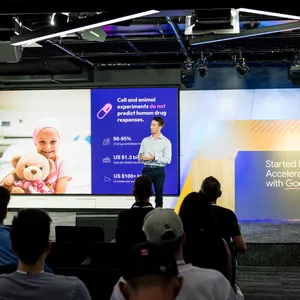
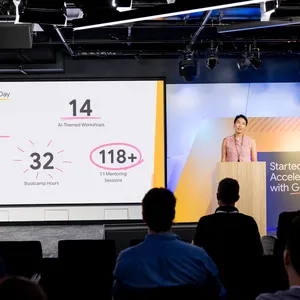
During our hands-on sessions at ANU, we demonstrated how tools like Gemini for Education and Gemini Notebook help academics synthesize dense research literature, prepare course materials, and explore complex topics with students. With Gemini for Education, universities also get enterprise-grade privacy protections, ensuring institutional data remains secure and is never used to train external models.
Connecting scattered data to answer real-world Australian questions
An AI tool is only as reliable as the facts behind it. When researchers study public health or deans model student pathways, they need to trust the numbers and see exactly where every statistic came from.
That is why we built Data Commons by Google, an open knowledge graph that brings together public data from authoritative global and national sources so people and AI tools can explore statistics in plain English. In Canberra, two Australian teams showed what happens when local university expertise meets connected public data:
- Planning Australia's future STEM workforce (Deakin University and Data De-Light): Working with Dr. Raju Varanasi, Prof. Rajeev Sharma, and Dr. Temuulen Tuguldur, this project connects Australian education, graduate outcome, and employment records with international OECD benchmarks. The tool helps university leaders spot skill gaps across regional labor markets and understand how graduates transition into the workforce. We are also building on this work with Deakin University to make real-world science data accessible to Indigenous and K-12 students and to study international student mobility.
- Tracking environmental health across Australian communities (AusEnHealth with QUT, FrontierSI, and NGIS): Led scientifically by Queensland University of Technology (QUT) in partnership with FrontierSI and NGIS, AusEnHealth brings together Bureau of Meteorology weather and air quality records, satellite forest cover data, and census indicators in a single visual map. Researchers and public health teams can ask questions in plain language to see how extreme heat and air quality affect local communities across Australia.
Keeping human judgment and trust at the center
Technology is most effective when it strengthens human expertise and scientific rigor rather than replacing them. During our closing panel chaired by Prof. Troy Farrell (QUT) with Prof. Robyn Murphy and Prof. Andy Martin (University of Melbourne), alongside Sheida Hadavi from the Australian Research Data Commons (ARDC), science leaders shared a clear perspective on what it takes to turn data into better decisions. Progress depends on pairing trustworthy, connected data with informed human judgment, while strengthening critical thinking in the classroom, practicing responsible AI governance, and respecting First Nations data ownership and control.
Looking ahead
Our week in Canberra and Brisbane is just the start of a deeper collaboration with Australia's university science community. Over the coming months, we are working alongside ACDS, Queensland University of Technology, Deakin University, the University of Sydney, and ARDC to help more faculties connect national research datasets, trial Data Commons and Gemini Notebook in their workflows, and give Australian scientists more time for the discoveries that matter most.