A new project recognising Indigenous Australian place names on Google Maps
For tens of thousands of years, Indigenous Australians have named, mapped and cared for the lands and waters across Australia. Google Maps is taking a step toward ensuring our platform reflects these histories, living cultures and connections to Country.
In partnership with 33 Creative, a leading First Nations owned and managed communications agency, we’re launching a pilot to feature Traditional Place Names on Google Maps across 10 Australian cities. 33 Creative led an in-depth collaborative research and consultations process, working directly with Traditional Owners, Elders and language experts to ensure proper representation and protocols were followed.
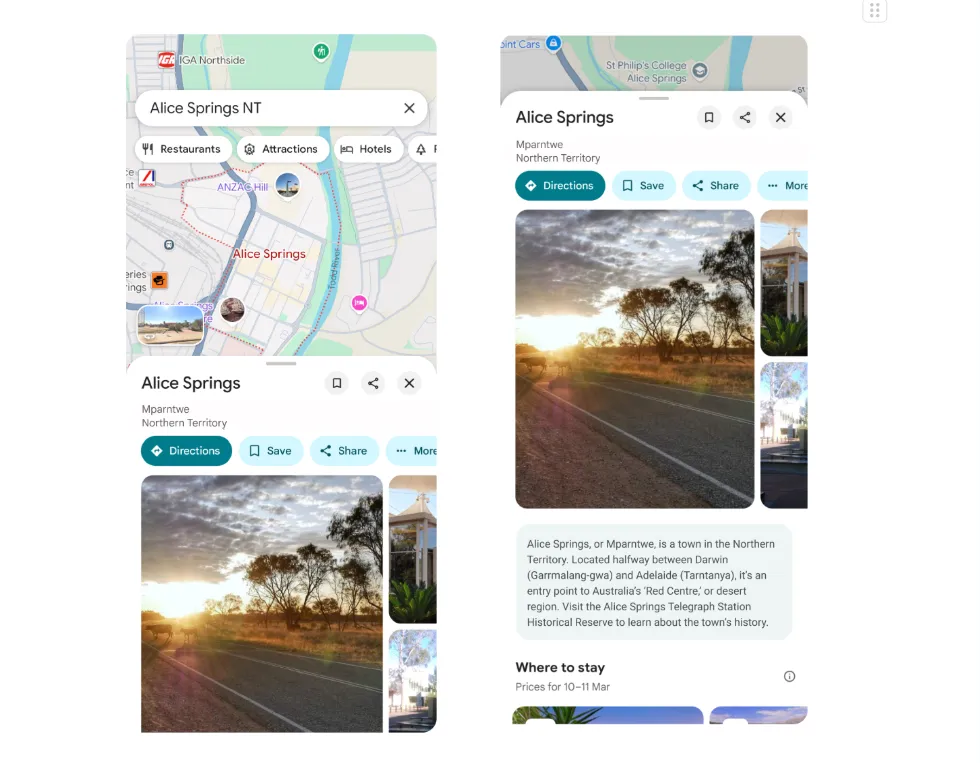
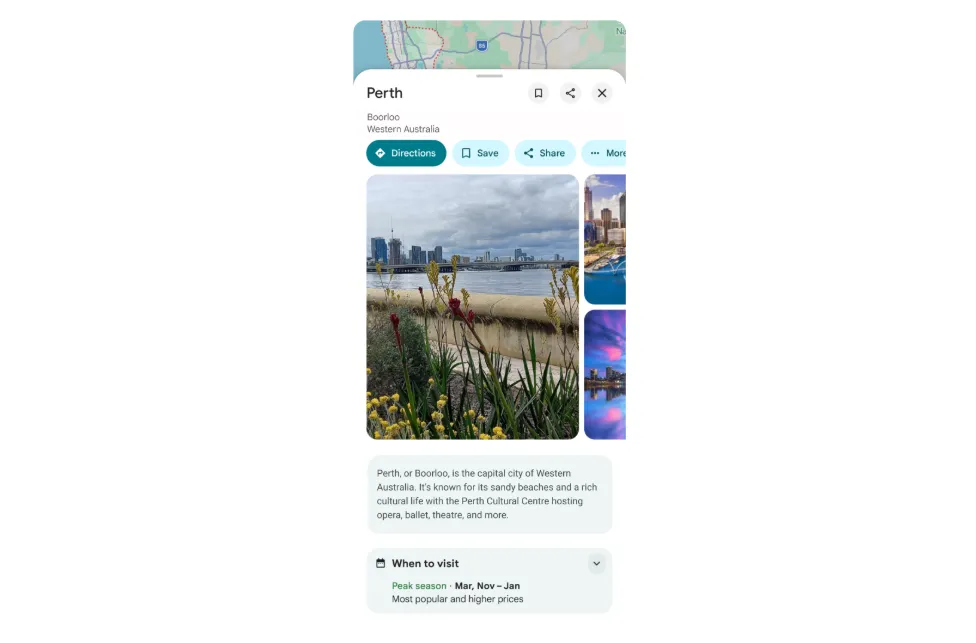
Starting today, the Indigenous names for these cities will appear in Maps, in the header of the city's placesheet and within its description.
Mayrah Sonter (Wiradjuri), Director, 33 Creative says “It has been an honour and privilege to connect with Aboriginal communities alongside the Google team to bring this exciting project to life’’ says Sonter. ''We understand and respect the power of language and are proud to see Traditional Placenames visible on the immense platform that is Google Maps. Thank you to the Google team, and especially the Custodians of Language and Country that we engaged with, for centring and honouring these knowledges.”
The 10 cities in the pilot are below:
- Adelaide: Tarntanya (Kaurna Traditional Custodians)
- Alice Springs: Mparntwe (Arrernte Traditional Custodians)
- Brisbane: Meeanjin / Magandjin (Turrbal & Yuggera Traditional Custodians)
- Broome: Rubibi (Yawuru Traditional Custodians)
- Cairns: Gimuy-Irukandji (Yidinji Traditional Custodians)
- Darwin: Garrmalang-gwa (Larrakia Traditional Custodians)
- Hobart: Nipaluna (Palawa Traditional Custodians)
- Melbourne: Naarm (Wurundjeri-Woi Wurrung Traditional Custodians)
- Perth: Boorloo (Whadjuk - Noongar Traditional Custodians)
- Sydney: Warrang (Gadigal Traditional Custodians)
We recognise that place naming is complex, continuous and deeply important. Guided by our Reconciliation Action Plan (RAP) commitments, this pilot is a meaningful step in our efforts to listen to Indigenous Australians perspectives, honour their custodianship, and make Australia's histories visible and accessible to everyone.