This content is generated by Google AI. Generative AI is experimental
[[duration]] minutes

Last week, Google hosted NYC educators to explore using Google's AI tools in classrooms; teachers shared ideas like virtual worlds for history and AI-generated quizzes. Google is committed to AI literacy, investing over $150 million, including the Google AI Educator Series with ISTE+ASCD, launching in May. Check out ai.google/literacy for resources like self-guided courses, AI Quests, the Online Safety Roadshow, Career Launchpad, and the Google AI for Education Accelerator.
Summaries were generated by Google AI. Generative AI is experimental.
Google had an AI Literacy Day for teachers to learn about AI. Teachers shared cool ideas, like using AI to create virtual field trips. Google is also giving schools money and resources to help teachers learn about AI. They want to make sure everyone knows how to use AI in a good way.
Summaries were generated by Google AI. Generative AI is experimental.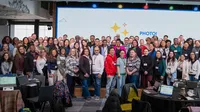
In celebration of National AI Literacy Day, last week, school leaders, educators, and students from New York City Public Schools spent the day at Google exploring how to use Google's AI tools to solve real challenges in schools, classrooms and beyond.
An educator presents his project to his table group during a session.

Here are just a few examples: A social studies teacher from the South Bronx shared his idea to use Gemini to create virtual worlds, allowing students to experience historical periods firsthand. Another teacher used NotebookLM to help her class conceptualize abstract themes like perseverance and strength by generating specific content and images so that her students could better write about the "hidden voices" of the Black community.
After an instructional technology coach shared how he used Gemini to create a "choose your own adventure"-style game to teach financial literacy, teachers were eager to build similar tools for their respective subjects. And in what many called a "wow moment," an ELA teacher taught others how to use Gemini in Google Forms to create quizzes based on lesson plans and curriculum, saving hours of planning and grading time. These are just a few examples of how, when given the right tools and training, educators will lead the way as AI becomes more prevalent in the classroom.
A teacher sharing feedback during an innovation session.

Because AI literacy matters every day of the year, we continue to be committed to offering high-quality, accessible AI literacy resources. Google.org’s funding for AI literacy has reached more than $150 million to date, and we’re excited to launch a new initiative, The Google AI Educator Series, which has been developed in partnership with ISTE+ASCD to make AI literacy professional learning available to all 6 million K-12 teachers and higher ed faculty in the U.S. We will be launching content on our website in mid-May, and hosting events throughout the summer as part of this effort.
We’ve also updated and expanded access to many other AI literacy efforts:
All these and more are available at ai.google/literacy.

Educators from New York City Public Schools engage in conversation on how to use AI tools to solve real-world challenges.

Educators from New York City Public Schools engage in conversation on how to use Google's AI tools to solve real-world challenges.

Danieta Morgan, Mid-Atlantic K-12 Education Lead for Google for Education, shares more on how our AI tools can be used by educators in their classrooms.

Educators from New York City Public Schools engage in conversation on how to use AI tools to solve real-world challengesz

Educators from New York City Public Schools engage in conversation on how to use AI tools to solve real-world challenges.

Educators from New York City Public Schools engage in conversation on how to use AI tools to solve real-world challenges.