[[duration]] minutes
This content is generated by Google AI. Generative AI is experimental
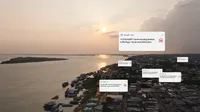
The world is experiencing a dramatic rise in extreme weather events and natural disasters, devastating communities. Over the past decade, our teams at Google have worked to make helpful information available to people at times of crises — often when they need it most.
We’ve advanced AI-based breakthrough research and progressed from providing timely information to forecasting and detecting natural disasters such as wildfires, floods, earthquakes and extreme weather. We’ve made critical information accessible via Google products that are used by billions, and partnered with governments and organizations around the world to help communities prepare for and respond to these crises.
Actionable information in times of crises can help save lives and livelihoods: our north star for our crisis resilience efforts is that no one should be surprised by a natural disaster.
At today’s AI for the Planet event, we shared how we’re making progress towards this vision, putting AI-powered tools and insights in the hands of our partners and users. Here’s a look at how we got here and what’s ahead.
A decade ago, reliable flood prediction at scale was largely considered out of reach. Our multi-year journey to global impact in flood forecasting began with a pilot in the Patna region in India in 2018, and the hypothesis that with machine learning, we could help predict floods at scale. Since then, we’ve progressively advanced research and scaled deployment. With our global model breakthrough for river floods, published in Nature, we expanded to data-scarce regions, and with our new AI-based methodology, Groundsource, we built a high-quality floods dataset based on 20 years of public reports, which we used to train a flash floods model. Today, forecasts on Flood Hub cover 2 billion people across more than 150 countries, in areas at risk for significant flood events. River flood forecasts are available up to seven days in advance, and our new flash flood predictions in urban areas provide up to 24-hour advance notice of these rapid-onset events. We’ve open sourced both the flash floods dataset and our hydrology framework, so researchers, businesses and local experts can build new solutions.
For extreme weather events like cyclones, WeatherNext 2 delivers our most accurate predictions yet. It can generate highly detailed hourly forecasts for the whole globe in minutes, and is capable of forecasting crucial weather variables including wind speed and direction, precipitation and pressure. During the 2025 hurricane season, it successfully predicted the path and intensity of cyclones with high confidence days in advance.
For wildfires, we use satellite imagery to provide AI-based boundary tracking in Search and Maps. Since our early work, we have expanded to provide coverage in 34 countries, including seven new countries this year. To improve future fire detection capabilities, we co-developed FireSat in collaboration with the Earth Fire Alliance and Muon Space, supported by funding from Google.org, the Moore Foundation, the Bezos Earth Fund and others. The first protoflight satellite was placed in orbit last year. A full FireSat constellation of 50+ satellites would be able to detect wildfires just 5 x 5 meters anywhere on earth, with updates every 20 minutes.
To address extreme heat, we’re applying AI to satellite and aerial imagery to map the reflectivity of buildings across urban environments, as we just published. This can help cities understand how to reduce surface temperatures by using cool roofs.
While individual models are powerful, many real-world questions require a holistic approach. Answering complex queries like, "Where is a hurricane likely to make landfall, and which communities are most vulnerable and how should they prepare?" requires reasoning about imagery, population and the environment. We’ve brought together our climate and geospatial models in the Google Earth AI collection of models and datasets. It enables planetary intelligence and is helping businesses and organizations address challenges like disaster response and planetary monitoring.
We provide crisis response updates on Search and Maps with SOS alerts, which bring together relevant information from authorities and trusted media outlets. And we partner with authorized alert originators and distributors in over 90 countries to amplify emergency alerts and public warnings with Public Alerts. Our crisis information has had billions of views; last year alone, Google helped connect people with crisis information over 10 million times per day, on average.
For information to be useful, it must be actionable. So for example, Extreme heat alerts on Search provide warnings for people in over 100 countries, including safety tips from the Global Heat Health Information Network. The Android Earthquake Alerts System detects earthquakes and alerts Android users before shaking reaches them, to give people time to get to a safe place. Up-to-date air quality data is available on Google Maps in over 30 countries, to help users reduce their exposure to pollution.
Building global resilience requires collaboration. By working with governments, UN agencies, organizations, scientists and first responders, we can help keep communities everywhere safe from natural disasters.
In Nigeria and Bangladesh, GiveDirectly and the International Rescue Committee have used our flood forecasts to power anticipatory action, distributing emergency cash ahead of rising waters so that communities can evacuate and safeguard their belongings. During Hurricane Melissa, when the U.S. National Hurricane Center used our WeatherNext model, it predicted the Jamaican landfall five days ahead, enabling the Met Service in Jamaica to notify the public. And across the world, Google.org is partnering with local organizations and funding disaster recovery efforts.
Over the past decade, we've made progress driving AI-based research breakthroughs and solutions for climate resilience, providing actionable, timely information to communities around the world. I'm optimistic that by harnessing AI and working with our partners, we’ll move closer towards a world where no one is surprised by a natural disaster.
Our north star is simple yet ambitious: No one should be surprised by a natural disaster.