Three new satellites join the fight against wildfires.
Today, three new FireSat satellites successfully launched from Vandenberg Space Force Base in California. This expands the FireSat program, a global initiative led by the nonprofit Earth Fire Alliance (EFA) to create an unprecedented wildfire dataset. Google Research has teamed up with leaders in the fire community, including EFA and satellite manufacturer Muon Space, to create this purpose-built constellation designed to provide the continuous coverage fire agencies need to detect wildfires before they spread.
This next phase builds directly on the momentum established last year when FireSat’s pilot satellite reached orbit. That mission successfully demonstrated the potential of the underlying sensor technology designed to detect early-stage wildfires as small as 5x5 meters. The pilot has already spotted small, low-intensity blazes invisible to existing satellites, and these three new orbiters carry that proven architecture directly into the growing network.
This milestone is a testament to what is possible when tech companies, nonprofits, philanthropy, and the private sector unite under a single mission. To help kickstart this work, Google.org has provided over $15 million to support the deployment of these early satellites. It’s a proud moment for the entire consortium, and another tangible step forward in putting practical AI to work for climate resilience.
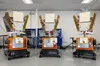
Three new FireSat satellites
Credit: Muon Space
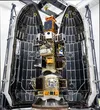
Satellites onboard the SpaceX Transporter-17 vessel
Credit: SpaceX
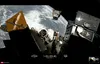
Satellites being deployed from SpaceX Transporter-17 vessel into space
Credit: SpaceX