[[duration]] minutes
This content is generated by Google AI. Generative AI is experimental
We introduced EmbeddingGemma last year to provide a lightweight option for high-quality text embeddings, to help your apps organize, search, and connect information directly on consumer hardware. The developer community’s response blew past our expectations. With more than 20 million downloads, builders have used it to power smarter on-device search tools and privacy-first retrieval augmented generation (RAG) pipelines.
Today, we’re launching EmbeddingGemma 2, expanding beyond text to unify code, images, video, and audio in a shared embedding space. Built on the Gemma 4 architecture and released under a commercially permissive Apache 2.0 license, EmbeddingGemma 2 has 740 million parameters, making it optimal for on-device inference. It can help find a specific video clip from a voice memo, or search through hours of audio recordings based on a text query, all processed by a single, natively multimodal model.
Built from the same technology as Gemini Embedding models, EmbeddingGemma 2 is:
EmbeddingGemma 2 matches the strong multilingual text performance of EmbeddingGemma while delivering a significant 9.92-point improvement on code performance (in MTEB Code, from 68.76 to 78.68), making it well-suited for local codebase indexing, semantic code search, and coding agent retrieval. Across image, video, documents, and audio, it sets a new standard in quality-per-parameter for sub-1B models and even outperforms some specialist models more than twice its size.
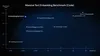
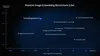
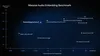
Find full evaluation metrics and model information in the EmbeddingGemma 2 model card.
EmbeddingGemma 2 brings robust capabilities directly to edge hardware. Generating embeddings locally helps ensure data privacy, reduces pipeline latency, and empowers developers to build cross-modal search and retrieval that works entirely offline.
When paired with generative models such as Gemma 4, EmbeddingGemma 2 enables on-device RAG pipelines that understand complex multimodal data. Because EmbeddingGemma 2 is built on Gemma 4 and shares its text tokenizer and audio encoder, developers can run both models together in a unified pipeline with a lower combined total memory footprint.
Use text or an image to find the top matches in your media library based on semantic similarity. Try it in Google AI Edge Gallery’s Instant Media Search.
Locate specific moments in video using text or audio queries. Try it in Google AI Edge Gallery’s Video Moments Finder.
Pair EmbeddingGemma 2 for local file retrieval with Gemma 4 for contextual reasoning. Try it in the Google AI Edge Foresight app.
Create real-time decision engines leveraging multimodal context for classification, routing, and predictive capabilities via the MediaPipe Decision Task API.
To learn how to build on-device search and RAG systems with LiteRT, read the Google AI Edge blog post.
We worked closely with the following partners to ensure EmbeddingGemma 2 works immediately where you build:
Explore our developer guide, documentation, and guides for inference and fine-tuning.