[[duration]] minutes
This content is generated by Google AI. Generative AI is experimental

It’s summer in the northern hemisphere — a time of beachside vacays, backyard barbecues, dripping ice-cream cones, and, occasionally, tricky conversations.
For many families, the season brings a challenge: balancing your workload with looking after kids who suddenly have a lot of free time. For some young minds, “free time” means “screen time,” and trying to set digital boundaries can cause friction.
To help, we connected with the Head of YouTube Health, Dr. Garth Graham, a father of four who’s deeply involved in the platform’s efforts to support kids’ wellbeing. Below, he shares how he sets rules in his own home, helpful approaches for communicating about screen time, and how our tools can stop you from having to be the bad guy.
Thanks for joining us, doctor. I’ll start with a simple one: Why not just give kids’ free rein? It’s summer, after all. (Can you tell I’m not a parent?)
Dr. Garth: [Laughs] I understand that temptation. But the key issue with screen time is less about quantity and more about the quality. Technology has immense benefits, but to extract them we should work with our children to be deliberate about what they’re watching. Take my eldest son. He’s gained an incredible amount of knowledge watching geography videos on YouTube — now he’s competing in a worldwide geography quiz competition. Intentional viewing can open up a world of experiences to kids.
Of course, summer is a balancing act, and we also want them to balance online and offline activities and build real-world relationships.
How do you begin that conversation?
Dr. Garth: Talking to kids about what they see helps them develop "critical viewing skills.” The American Academy of Pediatrics actually found that simply asking questions and engaging with them turns screen time into a shared bonding experience. So, grab a spot on the sofa next to your child and be curious. Ask what they’re watching and why they enjoy that specific creator. My sons, for instance, will watch a million soccer goals in repetition. By sitting with them, I understood they weren’t just entertained — they were learning about the game. When you learn about your children’s interests, you can start working on rules that work.
What does a good set of rules actually look like?
Dr. Garth: You want to build a family media plan, a kind of contract laying out your screen time rules: How much daily, when, and what. The number one factor in making it effective is creating it together. We sat down on a calm morning and co-created our plan, negotiating boundaries and consequences. It gave the kids a voice as co-owners of the rules.
How do you ensure kids will follow the rules? It’s not fun to play bad cop.
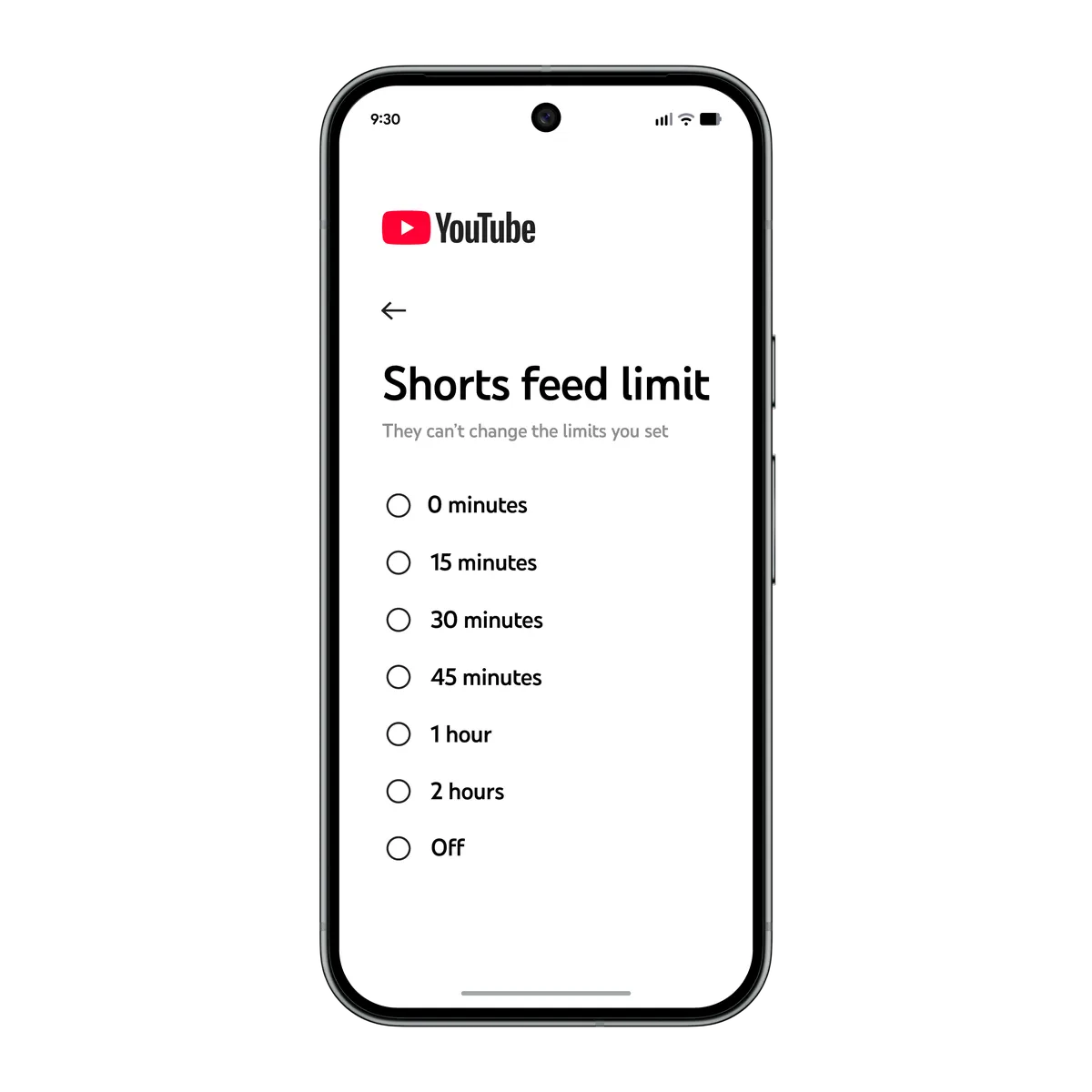
Dr. Garth: Let technology be the enforcer. With YouTube Parental controls, you can create a time limit for the Shorts feed and implement bedtime reminders. And you can use Google Family Link to get a picture of how your children spend time on their devices, manage privacy settings, and more.
We set the Shorts timer for 30 minutes in our house. When it kicks in, the child accepts the objective reality of the timer; it removes the parent from the adversarial role.
Dr. Garth recommends using controls like the Shorts feed limit.
That’s great advice for YouTube, but what do you recommend for parents overwhelmed by the idea of setting controls across multiple apps?
Dr. Garth: That’s where device-level controls like our Android parental controls come in. You can set screen time limits, block specific apps, set Google Play content filters, and create downtime schedules that automatically lock devices to protect sleep. These controls also provide a direct path to Google Family Link, where you can monitor usage and access features like “School Time” or location alerts.
Some critics say these tools are not a panacea. What do you say to that?
Dr. Garth: Research shows that when parents utilize these tools, they feel significantly more empowered. They actually increase their knowledge and skills, giving them confidence to move from just blocking and playing digital defense to actively guiding their children through the digital world. And our tools are not built in a vacuum. We partner with global experts, including YouTube’s Youth and Families Advisory Committee, who specialize in child safety, digital wellbeing, and development.
Our commitment goes beyond control, too: We proactively design age-appropriate experiences. Beyond the YouTube Kids app, for instance, we have Kids and Teen Quality Principles that are integrated into our recommendation systems to proactively surface high-quality content.
Let’s end on an ending. Winding up screen time can be the hardest part of the day — how can busy parents make it easier?
Dr. Garth: In the Graham household, we use three practical strategies. First, logical checkpoints: Let your child reach a “cognitive closing point,” like finishing a video. Next, provide a soft-landing by providing a high-engagement offline “bridge” to transition to, like cooking together or shooting some hoops outside. Finally, validate their pivot: When your child turns off the device without drama, praise them immediately.
My hope for my own kids this summer — and for all families — is that they use this time to have fun, collect diverse online and offline experiences, and continue to evolve into better people.