This content is generated by Google AI. Generative AI is experimental
[[duration]] minutes

Google and YouTube are committed to online safety for kids and teens. You can now manage your child's screen time and app usage more easily with updated parental controls on Google Family Link and YouTube. New resources like the Be Internet Awesome AI literacy guide and Guided Learning in Gemini are available to help educate and support young users online.
Summaries were generated by Google AI. Generative AI is experimental.
Last updated February 11, 2026
For more than a decade, Google and YouTube have launched products, supported programs, and implemented built-in protections that support kids and teens on our platforms, while also giving parents the tools and resources to make empowered technology decisions for their families. This Safer Internet Day, we’re sharing the latest updates that support kids and teens in the digital world.
Google and YouTube make it easy for families to choose and customize their experience through supervised accounts and parental controls. Google Family Link’s design now lets parents manage devices from a single page, plus view a device-specific usage summary, set time limits and more easily adjust controls from a consolidated screen-time management tab.
Similarly, for families using YouTube, an updated sign up experience will let parents create a new kid account and easily switch between accounts in the mobile app depending on who’s watching. Parents can also now set the amount of time spent scrolling Shorts – and soon, there will be the option to set the timer to zero. Parents of supervised kid and teen accounts can also set custom Bedtime and Take a Break reminders, building on the existing default-on wellbeing protections.
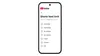
Parents can also rest assured that YouTube supports kids and teens through built-in protections, like age estimation, which uses machine learning to estimate a user’s age and make sure they’re getting the right viewing experience. YouTube also limits recommendations of content that could be problematic for some teens if viewed repetitively. Other default-on protections include Take a Break and Bedtime reminders being turned on automatically for users under 18, and Take a Break has a default trigger setting for every 60 minutes. Uploads are also private by default for creators aged 13 to 17.
School time support is now available for Android phones and tablets. School time can help reduce distractions by scheduling limited phone functionality and silenced notifications during school hours. If there is a vacation or planned day off, or even just lunches and recess, parents can easily adjust the settings and set a “break” to fit their children’s schedules. Parents can choose the apps that are silenced and restricted, and learn which apps their child uses while in School time or outside of it.
YouTube recently announced new teen quality content principles and a creator guide to help outline the kind of content that is fun, age appropriate, higher quality and more enriching. We use these principles to educate our global creator community on their role in supporting teens on YouTube. The principles also inform our recommendations system, allowing us to raise high quality videos and increase the frequency they are shown to teens. We first introduced high-quality principles for kids five years ago, helping to make our younger users’ time on YouTube a time for age-appropriate curiosity and exploration.
YouTube also partners with fan-favorite, high quality content creators and programmers like Sesame Street to bring more enriching content to families everywhere.
In August, we launched our Be Internet Awesome AI literacy guide, which offers educators of grades 2-8 downloadable lesson plans and classroom activities to make foundational AI literacy concepts engaging for students. We’ll continue scaling AI literacy throughout the program curriculum and Online Safety Roadshows in Canada and the U.S. this year.
We recently introduced Guided Learning mode in Gemini, which acts as a personal AI learning companion to help students build a deeper understanding of complex subjects and problems, instead of just providing quick answers. The tool encourages students to participate through probing and open-ended questions as they explore and dive deeper into their favorite subjects – from history to computer science.
In 2025, our partners and collaborators trained more than 60,000 caregivers, educators and parents on Google’s online safety tools for kids and families across the US, Brazil, India, Mexico, the UK and Spain. Today we’re announcing expanded partnerships with leading organizations around the world, including the National Center for Families and Learning, Education for Sharing, the National Cybersecurity Alliance, UpEducators, Fundación ANAR, SaferNet and our continued collaboration with National PTA. Through these collaborations, we’ll train 200,000 families and practitioners on tools for kids and families to stay safe online.