We’re catalyzing megaton-scale climate impact in Brazil
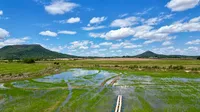
Today, we’re announcing our largest carbon removal purchase to date: a new partnership with Terradot that is designed to deliver megaton-scale climate impact by 2030 by deploying climate solutions at rice farms across Brazil. Through this agreement, we will purchase 1 million metric tons CO2e (GWP 20) of methane elimination by 2030, and 1 million metric tons of permanent carbon removal by 2040. It is the first publicly announced project to combine immediate impact through superpollutant elimination with lasting impact through durable carbon removal at this scale, all within a single agricultural system.
Combining immediate and lasting climate impact
Restoring the atmosphere requires confronting two challenges on distinct timelines. As highlighted by a recent UN report, it is critical to scale both short-lived superpollutant abatement and carbon removal in order to limit how high and how long temperatures spike. In the near term, we can address peak temperatures through immediate cuts to emissions of short-lived superpollutants like methane, which clear quickly from the atmosphere, alongside continued efforts to cut CO2. And, because CO2 remains in the atmosphere for centuries to millennia, bringing temperatures back down in the long term will require scaled durable carbon removal.
While most climate solutions are focused on either short- or long-term horizons, our partnership with Terradot will tackle both timelines simultaneously. It will combine superpollutant elimination and carbon removal to deliver megaton-scale climate impact by 2030 — and make it last permanently.
Transforming rice farming into a climate solution
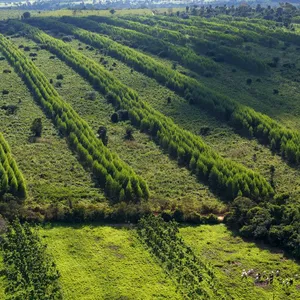
Terradot will achieve this near- and long-term impact by applying two complementary technologies across more than 200,000 hectares of rice farms in southern Brazil. First, Terradot will help farmers adopt Alternate Wetting and Drying (AWD), an irrigation practice that periodically drains flooded paddies. This drastically reduces methane emissions for an immediate burst of climate impact. Then, Terradot will spread naturally sourced, crushed volcanic rock across these exact same fields. As the rock dissolves over time, it permanently removes carbon dioxide from the atmosphere through a process known as Enhanced Rock Weathering (ERW).
Pairing these solutions allows each to do what it does best. The fast-acting methane elimination buys the time needed for the crushed rock to fully dissolve. As the short-lived methane benefit expires, the permanent carbon removal phases in to replace it. Measured on a temperature-over-time basis, this combined approach ensures a net decrease in warming on every time horizon.
Farmers will also benefit from the project: AWD reduces water use and lowers input costs, while the crushed rock can improve soil health, giving local communities an economic stake in the climate impact they generate.
Producing a replicable blueprint for scale
This approach to rice farming is primed for global scale. Southern Brazil is one of the most favorable places in the world to deploy this model; its tropical soils, warm and wet climate, and flooded rice systems naturally accelerate weathering, and basalt quarries sit close to the farmland. And this project is designed to be even more widely replicable: first across the 1.5 million hectares of rice under cultivation in Brazil, and eventually across other rice-growing regions worldwide. To examine this, we’re also funding research that will examine the methane-reducing potential of AWD in different rice systems across the world.
More broadly, our partnership with Terradot shows the transformative potential of combining superpollutant elimination with carbon removal, whether within a single agricultural system or across disparate projects. It’s the most tangible illustration so far of the portfolio approach we detailed in our 2026 Environmental Report: pairing action on superpollutants, which reduces warming quickly, with carbon removal that phases in to make the temperature impact last. It unites the ambitions of the advance market commitments we have cofounded (Frontier and Symbiosis for carbon removal; the Superpollutant Action Initiative for superpollutants), showing how both pillars of atmospheric restoration can be executed together in a unified system.
We hope this agreement will serve as a template to other buyers, suppliers, and governments aiming to maximize their climate impact. We look forward to continuing to help scale superpollutant elimination and carbon removal in tandem — so we can put an immediate and lasting dent in warming with the urgency the planet demands.