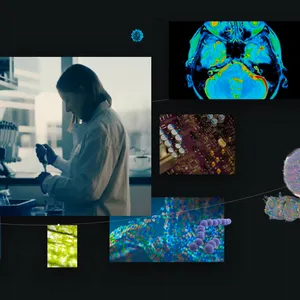
Building AI to accelerate science and improve lives

Sep 15, 2026

|

We’re asking what’s possible for health, natural disaster and weather resilience, learning, and economic opportunity.


James Manyika

SVP, Research, Labs, Technology & Society


Listen to article
[[duration]] minutes
This content is generated by Google AI. Generative AI is experimental

Today, we reached a significant milestone that stands as a testament to decades of AI research and advancement: Google technologies now support more than 300 languages, spoken by 7 billion people — representing 86% of the global population. To help us understand how these tools are driving real-world opportunity, we also released new interactive insights today with our AI & Economy ATLAS, the most comprehensive look at how real people are using AI globally. This comes on top of a raft of key AI advances in science to benefit people over just the past few weeks:

  • We mapped all 9 billion possible single letter genetic changes across the human genome with AlphaGenome Atlas and made it openly available to researchers.
  • We introduced WeatherNext 3, our most advanced and accurate global weather model, delivering 50% more accurate precipitation forecasts a day or more ahead — and it’s already in use in our products.
  • We brought together data on global health, food security, and socioeconomics into a single Planetary Prediction Engine to forecast planetary crises — this has already been used in the ongoing Ebola outbreak in the Democratic Republic of the Congo and in the U.S. in identifying vulnerable communities across 21 CDC health indicators.
  • We scaled AI research to help cut the climate impact of aviation — this is already being applied in the U.K. (in collaboration with the government) and in Asia.

What ties all of this work together? It is the belief that advances in AI can accelerate scientific progress in ways that will directly improve people’s lives today and in the future. This is a key element of what motivates our work in AI. We’re focusing our work in key areas that matter most: making disease detectable, treatable, and preventable, predicting natural disasters, expanding learning, and unlocking economic opportunities for more people.

While the possibilities are exciting, the benefits of AI are not guaranteed. Making them real — and mitigating their challenges and risks — demands that society works together. Though there is more still to do, AI’s progress is already making it possible for us to aspire to do bold and ambitious things that can benefit people, and to ask and address questions that were once considered impossible to solve.
Text: What if we could predict, treat, and prevent diseases before they take a toll?

We’re making progress in using AI to improve disease detection and diagnosis, and to better understand health conditions:
  • Deepening scientific discovery: Our Nobel-Prize winning AlphaFold has predicted all 200 million protein structures known to science, providing a new basis for understanding and researching diseases. It is now used by 4 million researchers in 190 countries in areas from drug discovery to understanding neglected diseases like Chagas disease and leishmaniasis. AlphaMissense is helping researchers predict disease-causing genetic mutations. And now, we’re building on AlphaFold and AlphaMissense with AlphaGenome Atlas, offering scientists predictive insights into how genetic variations alter cellular behavior.
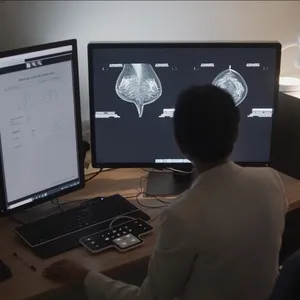
  • Earlier detection: Our recent breast cancer study with Imperial College London and the U.K.’s NHS showed AI can detect 25% of interval cancers previously missed in mammograms of 175,000 women. At the same time, we’re making meaningful progress in tools to help detect lung cancer, colorectal cancer, and genetic mutations in tumor cells.
  • Global screenings: For tuberculosis — where ~40% of infected people worldwide go undiagnosed — our chest X-ray (used by Nexus Intelligence) has screened over 25,000 x-rays across 40 locations in six nations. We are also using bioacoustic models to detect TB via coughs using Health Acoustic Representations. Meanwhile, our diabetic retinopathy model, developed with partners, has supported more than 1.15 million screenings globally, with plans to expand to 6 million over the next decade to help detect a treatable but growing cause of preventable blindness.
  • Expanding access: We’re pioneering the use of everyday smart phones and wearables for early detection of cardiovascular disease, insulin resistance, hypertension, loss of pulse, and passive heart rate monitoring. We’re working with leaders in Arkansas to help develop a blueprint for improving health outcomes in rural areas.
  • Tools for scientists and health practitioners: Collaborative AI tools like Co-Scientist are helping researchers accelerate and expand core steps of the scientific method, like generating and validating novel hypotheses (such as identifying new therapeutic applications for existing drugs for acute myeloid leukemia). We have also open-sourced AI tools like DeepConsensus, DeepVariant, and DeepPolisher. Over the last decade, these tools have assisted in completing the human genome, drafting the first pangenome, and enabling ongoing work as part of the Human Pangenome Reference Consortium, better representing human genetic diversity and allowing experts to more accurately diagnose and treat diseases. Through AMIE (Articulate Medical Intelligence Explorer), we are continuing to work on prospective evidence in real-world settings, collaborating with academic and medical institutions (e.g., Beth Israel Deaconess Center), and conducting a first-of-its-kind nationwide trial in real-world care settings. AMIE assists those providing care on the frontlines — freeing up doctors to spend more time with their patients.
Text: What if people and communities were never caught off guard by natural disasters?

To protect people’s safety and livelihoods, we need accurate predictions of natural disasters and weather. To make accurate predictions, we must understand the physical earth. Here’s how our technical and scientific progress is already making a difference in crisis prediction and detection:
  • Extreme weather and earthquakes: Last year, authorities in Jamaica used WeatherNext to accurately predict Hurricane Melissa’s path, securing early disaster funding and enabling life-saving emergency preparations long before the storm made landfall. Just a few months ago, our Earthquake Alert system alerted millions of people in Venezuela ahead of an earthquake. And we’re making progress in other areas, including cyclones and extreme heat.
  • Monsoons and floods: The scale of this work is encouraging. In 2025, our monsoon predictions provided information for 38 million farmers in India. And in just a few years, our forecasts on Flood Hub — now including both riverine floods and flash floods — have grown to cover 2 billion people across more than 150 countries in areas at risk for significant flood events.
  • Wildfires: Our AI tools have helped predict wildfire boundaries in the U.S. and 33 other countries. We’re also working with partners toward a FireSat constellation of satellites to detect wildfires previously too small to detect anywhere on earth. In 2025, we generated more than 520 crisis alerts on Google Search that provided timely wildfire information to over 75 million users around the world.
  • Next-gen prediction: With WeatherNext 3, we’re combining real-time satellite observations with AI, delivering high-resolution, hourly forecasts without immense supercomputing power — a major step forward for data-sparse regions that have been long underserved by high-resolution forecasting.
  • Planetary crisis mapping: We recently introduced the Earth AI Planetary Prediction Engine (PPE), an autonomous AI system that uses simple language instructions to almost instantly predict global crises like disease outbreaks, food shortages, and climate risks, helping humanitarian responders act faster during emergencies. In the ongoing Ebola outbreak in the Democratic Republic of the Congo, PPE successfully pinpointed 83% of emerging hotspots ahead of time, beating current forecasting systems. In Nigeria, PPE doubled food security forecasting accuracy at the local district level. And in the U.S., PPE outperformed traditional models in identifying vulnerable communities across 21 CDC health indicators. We’re continuing to expand prediction horizons to make these tools even more useful.
Text: What if we could unlock human potential for people everywhere?

Learning is the bedrock of economic and societal progress. The world has made huge strides in education: 90% of primary school-aged children globally are enrolled in school, and approximately 87% complete their primary education. But 2022 research showed uneven access to education, differences in education quality, and limited content availability across languages, among other issues. Global learning outcomes have declined over the last two decades across 81 countries.

AI offers a profound opportunity to expand access to knowledge and support learners and educators alike:

  • For learners: AI can enable personalized learning, remove language barriers, and make complex subjects more accessible through tools like Guided Learning. It can also expand access and support for learners and teachers, for example with free access to student tools in multiple countries.
  • For educators: AI can help with research, preparation, and administrative tasks, freeing up time to spend with students.

Tackling challenges and focusing on responsible design: AI presents real challenges for learning, including questions on accuracy, safety, critical thinking, cheating, and learning loss. That’s why we have partnered with ISTE+ASCD to provide AI literacy training to all 6 million educators in the U.S., while conducting ongoing and rigorous research to ensure we design our educational tools with teachers in the lead, and AI as the assistant. We still have much to work through together.
Text: What if workers, entrepreneurs, and small businesses had tools to realize their most ambitious ideas?

Across the economy, AI can drive innovation and productivity for workers, businesses, and organizations across sectors. Its true value isn’t in what it does on its own, but in how people choose to use it and what they build with it:
  • For small businesses: AI can help deliver new products, services, and economic growth. Small businesses are scaling custom marketing campaigns with Pomelli and bringing together complex regional sales data from different product lines with the Gemini Enterprise App.
  • The future of work: The economic benefits of AI are neither automatic nor guaranteed. Like other new technologies, we expect AI to reshape work in three major ways: Some jobs are likely to decline, some jobs will grow, and many more jobs will change as AI increasingly assists workers. To understand these shifts, we’ve launched the AI & Economy ATLAS, which provides empirical insights on how people are using AI tools at work and in their daily lives, and translated the data into an interactive, open-access experience.
  • Skilling: Training and skill building must be accessible to all regardless of a person's geography, language, or access to capital. To date, Google has provided more than $1 billion globally in training and skilling initiatives, helping over 100 million people gain essential digital and AI skills, from electricians and other skilled tradespeople, to rural healthcare workers, to manufacturing workers. More tailored worker assistance and transition support will likely be needed.
Text: What if the information and benefits of these areas were universally accessible and useful?

Grounded in our company’s founding mission, we are making important strides in breaking down languages and accessibility barriers with products, research, and models that understand the world’s languages exactly as they are expressed:

  • Language tools: AI and machine learning have been part of Google Translate since its launch in 2006. Since then, advances in AI have helped us expand our technologies and products to support nearly 300 languages, spoken by 7 billion people — representing 86% of the world’s population, and helping more than 1 billion people translate around 1 trillion words each month. Our goal is to support the world’s 1,000 most-spoken languages.
  • Inclusive speech technology: Access is broader than translation alone. For example, automatic speech recognition uses AI to understand spoken words and convert them into text. To help build inclusive speech technology, we partnered with Makerere University, University of Ghana, and Digital Umuganda to create an open dataset for 27 African languages spoken by over 100 million people. One language alone may have 100 dialects, each with its own nuance, which is why we’ve also partnered with IISC-Banglore and ARTPARK on Project Vaani to open-source speech and image datasets for 109 Indic languages.
  • Accessibility: Beyond spoken languages, we've been making our tools more accessible for people with disabilities, including with our recent sign-language-to-text (SL2T) model for sign-to-text dictation.
Curved blue line with dots

Bold and responsible, together

We believe that such bold ambitions for the societal benefits of AI must always be accompanied by an equal commitment to responsibility. This is the basis of our bold and responsible approach to AI. Beyond our ongoing work to address the immediate and future risks of AI (detailed in our annual updates), the application of AI and science presents distinct challenges: On the one hand, we need the right detection, reporting, and mitigation tools in place to address risks around chemical, biological, radiological, and nuclear (CBRN) mis-use. At the same time, it is important to avoid the risk of missed use — that is, not applying AI in places and communities where it would provide benefit and, in some cases, worsening existing societal challenges and gaps.

We believe advancing scientific discovery and bringing those benefits to communities requires that we collaborate deeply with many other researchers and scientists working to tackle similar issues, including academia, national laboratories, philanthropic foundations, non-governmental organizations, governments, other companies, and local partners. The examples of advances cited above have benefited from such research collaborations and our own Google.org grant-making to accelerate scientific discovery and to address society’s greatest challenges. That’s why as part of our longstanding commitment to supporting science and discovery in academia, Google has given more than $1 billion across 1,700+ research institutions worldwide since 2006.

As Nobel laureate Joel Mokyr noted, new technology drives scientific advances, which in turn drive new technologies, creating "a positive feedback loop that can keep growing with no end in sight.” And it does so in ways that have improved people’s wellbeing and propelled societal progress. AI is the most powerful engine for that loop we have ever built — and we’re just getting started.

Read more about how we’re using AI to help people, improve lives, and benefit society at our website.
Get the latest news from Google in your inbox

Sign up for our newsletters with product updates, event information, special offers, and more.

Your information will be used in accordance with Google's privacy policy. You may opt out at any time.

About the author

James Manyika

James Manyika

SVP, Research, Labs, Technology & Society

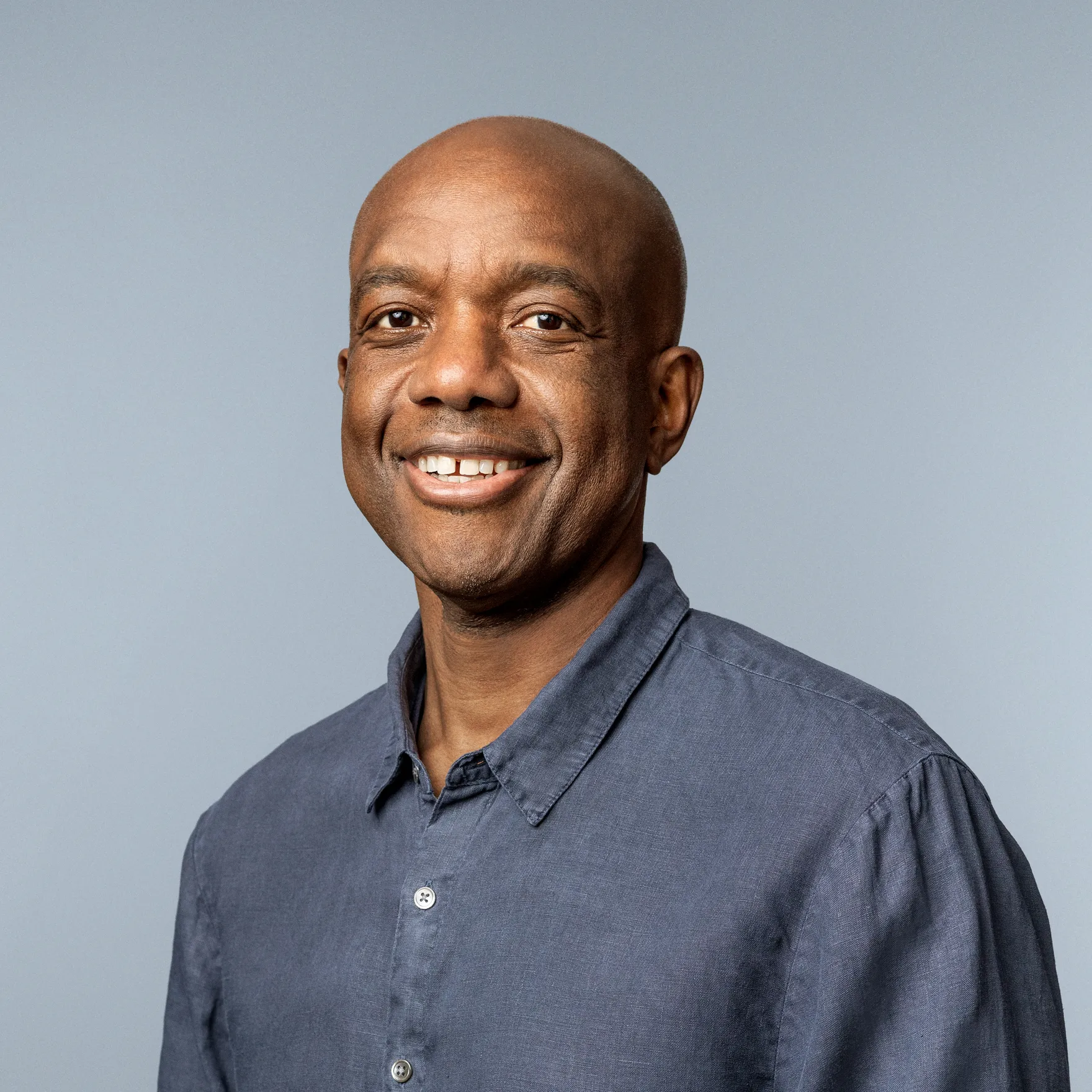
As Google’s SVP of Research, Technology & Society, James oversees Google Research and leads efforts across Google and Alphabet to responsibly shape and advance our most ambitious innovations to benefit people and society.

Read more from James Manyika